Installing a large Ferris wheel in a coastal environment presents unique technical, logistical, and regulatory challenges. Salt air corrosion, wind load requirements, foundation conditions, and local approval processes all demand a higher level of engineering precision and project coordination.
This case study explains how we supported a customer in successfully installing a 42-meter Ferris wheel in a coastal park, from early planning and design to installation and commissioning, while ensuring long-term safety and operational reliability.
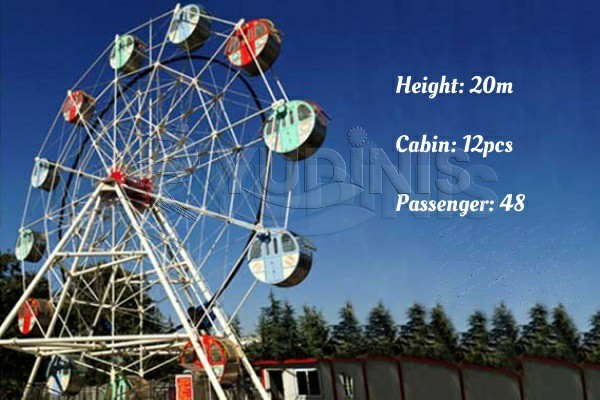
Project Background: A Coastal Park Landmark Attraction
The client is a coastal city park operator aiming to enhance the park’s skyline and create a signature attraction to increase tourism, extend visitor dwell time, and support year-round operation.
Project objectives included:
Creating a landmark observation attraction
Ensuring high safety standards in a marine environment
Minimizing long-term maintenance costs
Completing installation within a fixed opening schedule
A 42m Ferris wheel was selected as the optimal balance between visibility, capacity, and investment scale.
Why a 42m Ferris Wheel Was the Right Choice
For coastal and urban parks, a 40–45 meter ferris wheel for theme parks offers several advantages:
Strong visual impact without excessive structural complexity
Suitable height for panoramic sea and city views
Family-friendly ride experience with high repeat value
Lower land and foundation requirements compared to giant observation wheels
This size category is widely used in city parks, waterfront developments, and tourism zones.
Engineering Challenges in a Coastal Environment
1. Corrosion Resistance
Coastal air contains high salt concentrations that accelerate metal corrosion. To address this, we implemented:
Hot-dip galvanized steel structure
Marine-grade anti-corrosion coating system
Stainless steel fasteners in critical joints
These measures significantly extend the Ferris wheel’s service life and reduce maintenance frequency.
2. Wind Load and Structural Safety
Coastal parks are often exposed to strong and variable winds. Our engineering team:
Conducted wind load calculations based on local climate data
Optimized wheel geometry and support structure
Designed reinforced foundations suitable for sandy soil conditions
The final structure complies with international amusement ride safety standards and local building regulations.

Custom Design and Cabin Configuration
The Ferris wheel for sale was customized to match the coastal park’s branding and operating needs:
Fully enclosed gondolas for wind protection
UV-resistant materials suitable for strong sunlight
Soft LED lighting system for nighttime waterfront visibility
Balanced cabin capacity to maximize hourly throughput
The result was a ride that operates comfortably during both daytime heat and evening sea breezes.
Manufacturing, Transportation, and On-Site Installation
Factory Preparation
All major components were pre-assembled and tested at the factory to reduce on-site risks and installation time.
Logistics Planning
Given the size of the 42m Ferris wheel, transportation was carefully planned to accommodate:
Oversized steel components
Port and road delivery constraints
Coordinated arrival schedules
Installation Support
Our team provided:
Detailed installation drawings
Step-by-step assembly guidance
On-site technical supervision during critical stages
This ensured accurate assembly, alignment, and commissioning.
Commissioning and Safety Verification
Before opening to the public, the panoramic wheel for sale underwent:
Load testing
Electrical and control system checks
Emergency stop and evacuation drills
Final safety inspections
Only after meeting all performance and safety criteria was the ride approved for operation.
Project Results and Operational Impact
Since opening, the 42m Ferris wheel has delivered measurable benefits:
Became a visual icon of the coastal park
Increased visitor dwell time and repeat visits
Generated stable, long-term ticket revenue
Required minimal maintenance due to corrosion-resistant design
The client reported strong visitor feedback, especially during sunset and nighttime operations.

Key Takeaways for Coastal Park Developers
If you are considering a Ferris wheel for a coastal or waterfront project:
Choose corrosion-resistant materials from the start
Prioritize wind load and foundation design
Work with a Ferris wheel supplier experienced in outdoor, marine-environment installations
Plan installation and logistics early to avoid delays
A properly engineered 42m Ferris wheel can serve as a reliable, high-value attraction for decades.
Conclusion
This project demonstrates that installing a Ferris wheel in a coastal park is not just about selecting the right ride—it is about engineering expertise, environmental adaptation, and comprehensive project support.
By addressing corrosion, wind, and installation challenges from the planning stage, we helped our customer successfully deliver a landmark attraction that enhances both the park’s identity and its long-term revenue potential. Click our official website for more detaled information: https://www.kidsparksolutions.com/ferris-wheel-for-sale/
