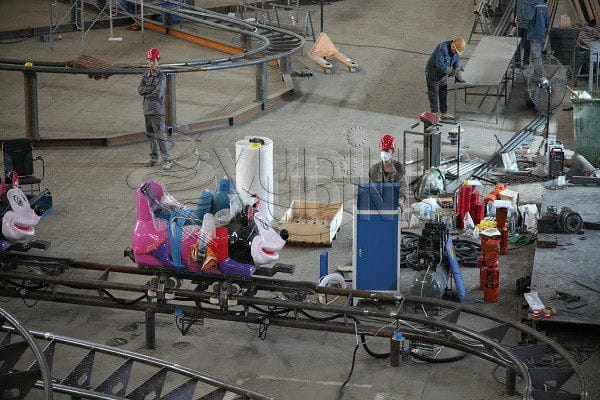
Custom wild mouse roller coaster track layouts can be changed, but not every element is freely adjustable. A coaster is an engineered system of track geometry, vehicles, supports, controls, clearances, and site constraints. Customization should therefore be defined as a set of approved options rather than a promise to redraw the ride without limits.
A Theme park wild mouse roller coaster for sale can be adapted to a site through layout and theme choices, but the supplier must confirm that the final configuration remains within the approved design. The track layout customization for wild mouse coaster should show which changes are available, which are custom engineering, and which affect the whole ride.
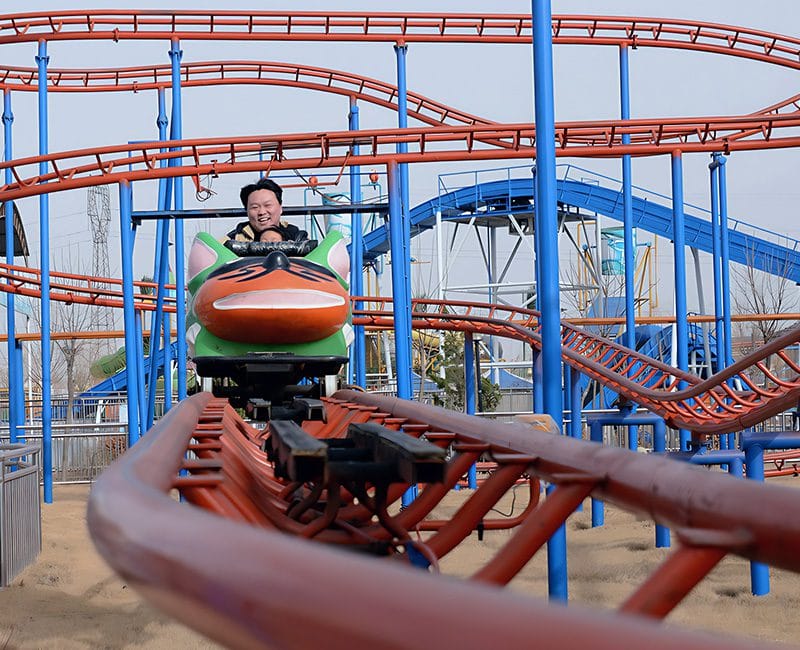
Track Length and Lateral Layout
Track length and the arrangement of turns can be adjusted within engineering limits. A longer circuit may allow more movement or a different visual route, but it changes supports, clearances, coatings, inspection, and cycle time.
The wild mouse coaster track length impact is one of the clearest examples. A design change that adds track can affect pacing and throughput even if the station remains the same.
Turn Geometry and Ride Sequence
Turn radius, banking, lift position, brake locations, and the sequence of low and high sections influence the guest experience. Some changes can be incorporated into a proven layout; others require new engineering analysis and testing.
| Customization area | Usually considered | Requires engineering review |
|---|---|---|
| Overall footprint | Rotating or mirroring the layout where space allows | Clearances and access routes |
| Track length | Short or long variants within a model family | Pacing, supports, and cycle time |
| Theme | Colors, scenery, station styling, and lighting | Weight, access, and maintenance |
| Station | Queue and enclosure arrangement | Loading flow and structural interface |
| Vehicle count | Operating fleet within approved block design | Controls and station logic |
Station and Queue Changes
The station can often be adapted to available space and guest flow, provided the platform, vehicle movement, gates, and operator sightlines remain safe. A larger queue or themed entrance should not obstruct evacuation or maintenance.
Ask how the customized station affects staffing and ride availability. A visually impressive enclosure that makes restraint checks difficult is a poor long-term choice.
Structure and Foundations
Every layout change affects support locations and foundation loads. The building or site engineer needs the final reactions before designing foundations. Delaying that review can lock out an otherwise feasible layout.
Some structural or mechanical components may use Chrome steel where the approved specification requires it. Material substitutions require documented engineering approval and must preserve the designed surface and inspection requirements.
Vehicles and Customization
The Dinis wild mouse vehicle planning can confirm how the number and configuration of cars interact with the custom layout. Adding a vehicle may look like a simple capacity upgrade, but the circuit, station, controls, and operating rules all need review.
Site Constraints
Columns, drainage, property lines, overhead services, and shared access can reshape a custom layout. Stakeholder requirements such as landscaping or existing buildings may turn an apparently simple rotation into a full engineering change.
Provide a measured site survey rather than a rough sketch. Show all underground and overhead services, and confirm that the maintenance vehicle and emergency routes remain available.
Theme and Guest Experience
Colors, signs, scenery, lighting, and station storytelling can be customized without changing the ride mechanics, although they still require safe attachment details and service access. Theme changes may also affect wind loads or require noncombustible materials.
Understand the Limits of Customization
Separate proven options from new engineering
A model family may offer several approved footprints, vehicle counts, or theme packages. These can often be selected with less engineering effort because their performance and interfaces are already known. Moving a support, changing a turn, or adding a new station arrangement outside those options requires a fresh design review.
The custom design must preserve vehicle clearance, structural loads, braking distances, evacuation routes, and the control-system logic. It must also remain buildable and inspectable. A drawing that looks attractive in a presentation but cannot be fabricated or maintained is not an acceptable custom layout.
Ask the supplier to identify every deviation from the baseline model. The list should show the reason for the change, the engineering work required, and any effect on price, schedule, or approvals.
Design reviews should include maintenance staff as well as commercial and engineering teams. Their practical questions about access, parts, cleaning, and inspection can expose a custom detail that would otherwise become a daily operating problem after the ride opens.
Keep the approved drawing and variation list under document control. Any later site change should be reviewed against that same baseline before fabrication or installation proceeds.
This approach reduces avoidable changes.
It also protects approvals.
- Mark fixed constraints on the site survey.
- List required and optional layout changes.
- Obtain updated loads and clearances.
- Confirm fabrication and inspection feasibility.
- Approve the final drawing before production.
What a Supplier Should Provide
- A marked-up layout showing the custom elements.
- A list of engineering changes and approvals.
- Updated structural reactions and clearances.
- Effects on vehicles, controls, and operating procedures.
- Delivery and installation impact.
Use the compare custom track layouts to compare the baseline and custom options. A custom coaster project manufacturer can coordinate the revised scope with the local building and site work.
Define Customization Before Contract
Custom track layout works best as a controlled engineering process. Begin with a proven model, list the required site-driven changes, and obtain written approval for the final configuration.