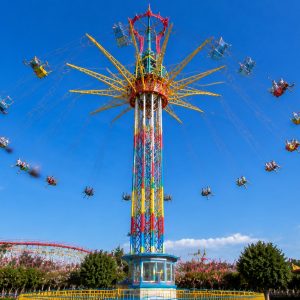
On a 42 m tower, wind is not a secondary consideration. The structure acts as a long lever, and the pressure on the tower, the gondola and the swinging seats produces the largest loads the ride will ever see. Wind determines the steel, the foundation and the number of days the park can operate each year.
This article explains how wind resistance affects the design of a 42m sky flyer ride for sale, why two identical towers can have different structures depending on where they are installed, and which questions a buyer should ask before approving a design.
1. Wind Is the Dominant Load
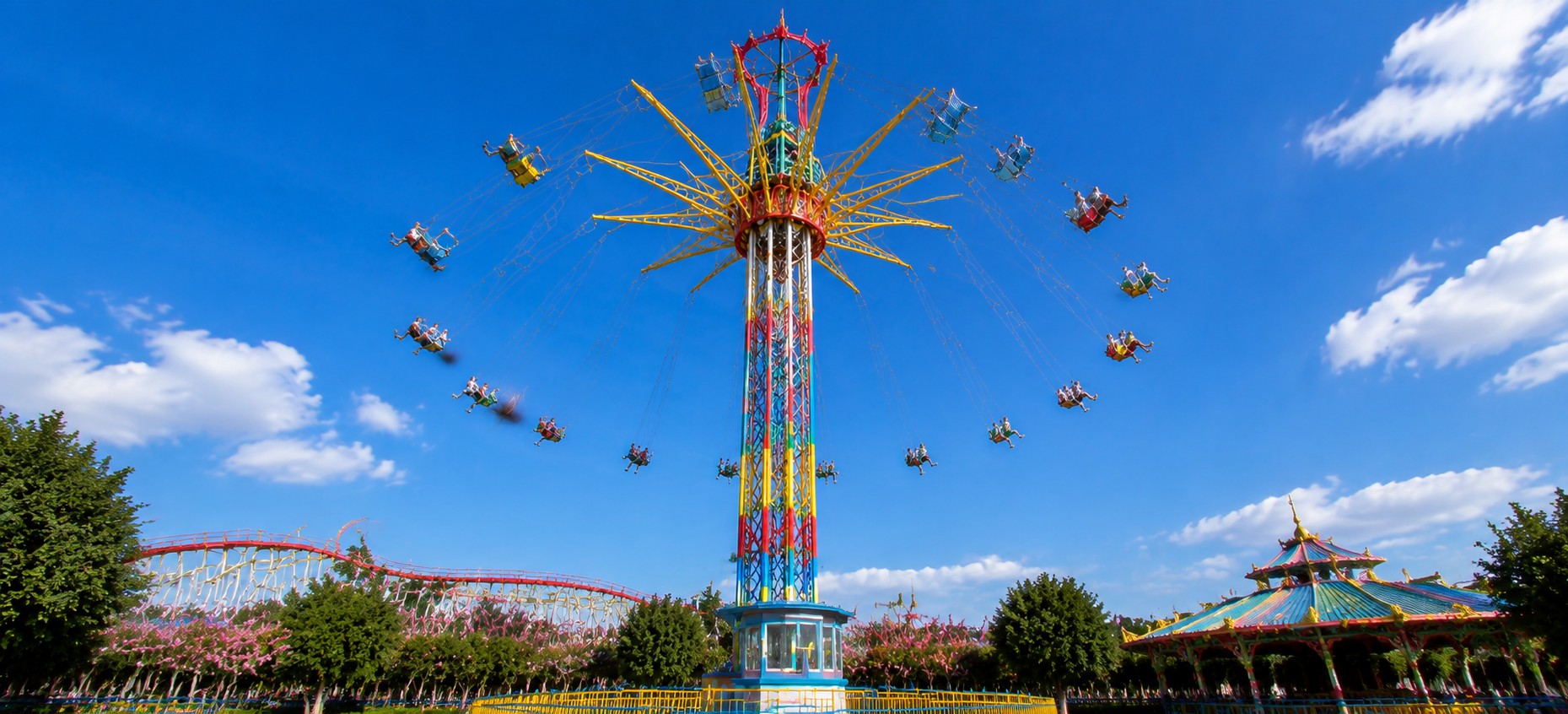
Dead load is predictable: the tower, gondola, seats and passengers weigh what they weigh. Passenger dynamic load is bounded by the ride’s motion. Wind, by contrast, varies from a breeze to a storm, and its effect grows with height because wind speed increases above the ground.
For a high observation swing, the wind case usually governs the tower section sizes and the foundation. A ride designed for a sheltered inland site may not be suitable for an exposed coastal location without redesign.
2. Design Wind Speed and Return Period
The design starts with a reference wind speed taken from the local code, usually expressed for a return period of 50 years or more. That is a survival requirement, not an operating condition: the structure must remain safe in a storm in which the ride is closed.
The design wind speed is then adjusted for terrain, height and exposure. A tower in a city centre surrounded by buildings experiences different wind than one on an open beach, even at the same nominal regional speed.
3. How Wind Acts on a Tower
Wind pressure acts on the projected area of the tower, the gondola and the seats. Because it acts at height, it creates both a horizontal force and a bending moment at the base. The taller the tower, the larger the moment for the same pressure.
Vortex shedding and dynamic response also matter. A slender structure can oscillate under steady wind, and the design has to consider whether those oscillations are acceptable and how they affect fatigue over the ride’s life.
4. Torsion and the Swing Arms
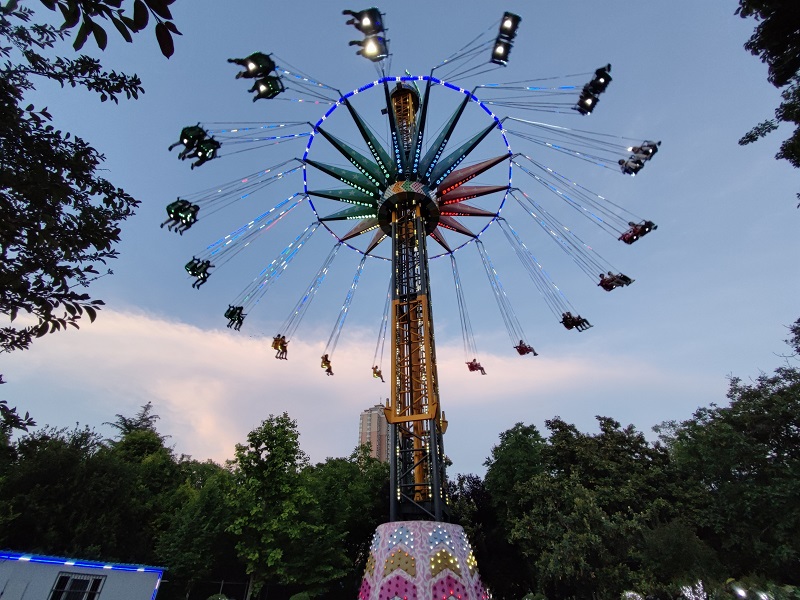
The swing arms and seats add a second problem: they present a large area to the wind and can rotate around the tower. A gust acting on one side of the gondola produces a torsional load that the drive and the structure must resist.
This is why the seat and gondola design is part of the structural calculation, not a cosmetic choice. A swing chair tower ride with a different gondola, larger seats or additional decoration can require a different structural design.
5. Overturning and the Foundation
The wind-induced moment at the base is transferred to the foundation, which must have enough mass and contact area to resist overturning with an adequate factor of safety. This is why the foundation load schedule is site-specific.
A foundation designed for a sheltered site may be inadequate for a coastal plot with the same tower. Buyers should provide the exact location, not just the country, so the manufacturer can use the correct wind parameters.
6. Operational Wind Limits vs Design Wind
The design wind speed is not the operating limit. The ride has a separate maximum operating wind speed, usually much lower, at which passenger comfort and safety are acceptable. Above that speed, the ride stops accepting passengers.
Ask how many days per year the ride is expected to close because of wind at the proposed site. For an exposed coastal park, that number can be significant enough to change the investment case.
7. Site Exposure and Terrain
Terrain category describes the roughness of the surroundings: open water and flat beaches produce higher wind speeds at height than dense urban areas or forests. Local topography can also accelerate wind over ridges and through gaps between buildings.
Two parks in the same country can therefore receive different tower designs. A manufacturer that asks for the exact coordinates and site plan is doing the calculation properly.
8. Design Responses
Engineers respond to wind in several ways. They increase the tower section and the base plate, adjust the foundation, change the gondola’s projected area, add damping or modify the control system to limit operation in higher winds.
Each choice has a cost, and the cheapest design is not always the one with the lightest structure. A tower that requires frequent closures because of a low operating limit may cost more over its life than a slightly heavier structure with a higher limit.
9. What Buyers Should Ask
- What design wind speed and return period were used?
- Which terrain category and exposure apply to the site?
- What is the maximum operating wind speed?
- How many days per year will the ride close because of wind?
- Does the foundation design reflect the site-specific wind load?
- How does the gondola design affect the wind area?
A tower observation ride by Dinis is designed against the wind parameters of the project site, and the base reactions supplied to the civil engineer reflect those parameters. The structure is fabricated from carbon steel sections sized for the resulting loads. Dinis has supplied tower rides, ferris wheels, swing chairs and complete park equipment packages from Zhengzhou, China for more than twenty years. As an amusement ride equipment supplier, the company provides the structural calculations and operating limits that let a park plan its calendar and its budget realistically.
Current project reference: https://www.dinisdreammyland.com/products/42-m-sky-flyer-ride-for-sale/