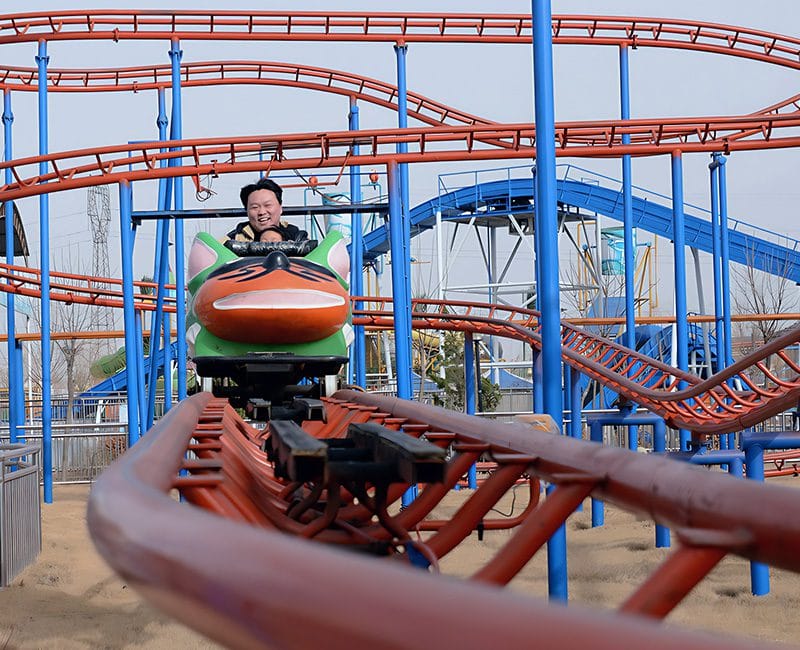
A wild mouse roller coaster can be a strong addition to a family park, small theme park, or entertainment center because it combines a recognizable ride experience with a compact footprint. The important question is not only whether visitors will ride it, but when the ride’s contribution will cover the cost of buying and operating it. A break-even calculation turns that question into a planning tool.
The goal is to estimate how many riders or operating days are needed before cumulative net revenue equals the project’s fixed investment. An operator considering a Theme park wild mouse roller coaster for sale should build the model from the quotation, the site plan, and conservative attendance assumptions rather than relying on a single supplier claim.
The Basic Break-Even Formula
The simplest ride-level formula is:
Break-even riders = annual fixed costs ÷ average net contribution per rider.
The average net contribution per rider is the average ride revenue attributed to that rider minus the variable cost of serving that rider. Annual fixed costs include ownership and operating expenses that do not disappear when the ride is quiet. If the roller coaster has a separate ticket, the calculation can use ride revenue directly. If access is included in park admission, use a fair allocation rather than assuming every visitor pays the full gate price for this one ride.
Break-even operating days
The same model can be written as:
Break-even operating days = annual fixed costs ÷ average net contribution per operating day.
Days are often easier for seasonal parks to interpret, because opening calendars are limited. The calculation should use normal weather and normal staffing, not the busiest festival weekend.
What Counts as Fixed Cost?
Fixed cost begins with the delivered and installed project cost. If the park borrows money, finance expense may also belong in the ownership model. Annual fixed costs can then include insurance, inspection support, planned maintenance contracts, operator and attendant labor that must be scheduled whenever the ride opens, control-system upkeep, training refreshers, and a reserve for major components.
Keep land and shared infrastructure only in the model if they would not otherwise be incurred. This avoids inflating a good ride decision with costs that serve several attractions. Document every choice so another manager can reproduce the result.
What Counts as Variable Cost?
Variable costs change with rider volume or operating days. Depending on the operating model, they may include extra attendants during peak periods, cleaning supplies, consumables, inspection work linked to running hours, and incremental power use. A break-even model should not hide major costs in a percentage estimate without support.
The ride’s energy demand depends on the motor, lift, controls, lighting, and operating cycle. Ask the supplier for component information and maintenance requirements, then use local utility rates. For mechanical details, Galvanized steel can contribute to corrosion resistance, but the ride still requires the inspections and corrosion-control tasks specified in its maintenance manual.
Estimate Revenue per Rider
Revenue can come from individual ride tickets, unlimited-ride bands, park admissions, or a combination. Allocate admission revenue carefully. If guests visit mainly for other attractions, crediting the entire gate price to the roller coaster will overstate its return. A conservative model can assign a realistic share based on why guests visit and how often they choose the ride.
Rider volume should be estimated from warm-up and operating forecasts, but capacity is only a ceiling. Actual demand may be lower because of weather, queue tolerance, competing attractions, and the park’s opening pattern. Use a normal-season scenario and a low-demand scenario rather than relying on theoretical hourly capacity.
Build the Calculation in a Repeatable Table
| Model input | How to prepare it | Why it matters |
|---|---|---|
| Total installed investment | Use the approved quotation plus documented site work | Defines the amount that must be recovered |
| Annual fixed costs | List insurance, labor, maintenance, reserves, and finance expense | Shows the cost of keeping the attraction available |
| Net revenue per rider | Subtract verified variable costs from allocated ride revenue | Shows contribution from each additional rider |
| Riders per operating day | Use conservative attendance and ride-share assumptions | Connects demand to park opening days |
| Operating days per year | Use the planned calendar, not maximum possible days | Annualizes the ride’s contribution |
| Payback target | Set the owner’s required recovery period | Tests whether the ride fits the investment plan |
Enter the inputs, calculate the annual contribution, and divide the investment by that contribution to estimate payback in years. Run the same model with low, expected, and strong demand scenarios. If the project only works in the strongest case, the operator should revisit the scope, cost, or revenue assumption.
Test the Model Before Buying
Review queue length, loading arrangements, ride cycle, and operator staffing alongside the financial model. A compact coaster may fit the site yet still require a larger station or queue than expected. Ask the Dinis coaster supplier to provide the technical details that drive staffing and maintenance. Use the wild mouse coaster price and specs to compare the equipment scope, delivery terms, installation support, and spare-parts package.
During selection, a wild mouse coaster selection guide should cover site fit, capacity, safety systems, documentation, training, and local service support. These details influence the costs used in the break-even model and the risk of an extended closure after opening.
Before approving the financial model, confirm these operating inputs with the supplier and the park team:
- Expected riders per operating day under normal weather.
- Ride revenue that can reasonably be attributed to the coaster.
- Staffing levels required for loading, controls, and queue management.
- Preventive maintenance, inspections, spares, and planned downtime.
- Opening days and the share of guests expected to ride.
Monitor the Real Result After Opening
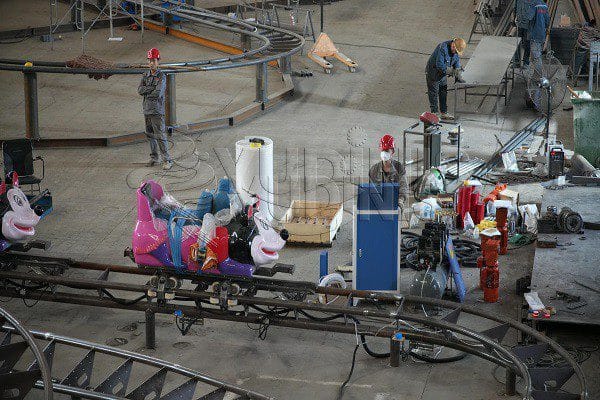
Once the ride operates, replace estimates with records. Track riders, net ticket or admission contribution, operating days, labor, maintenance, power, and unplanned closures. Review the actual average contribution per rider and per operating day. If ridership is below plan, investigate pricing, visibility, queue design, ride appeal, and operating hours before changing the financial target.
To review the ride specifications and compare models, prepare the opening calendar and a conservative attendance forecast. As an amusement park equipment partner, the supplier can provide technical details needed for the model. The result will not predict the future exactly, but it will show which assumptions matter and how much room exists before the project misses its recovery target.
