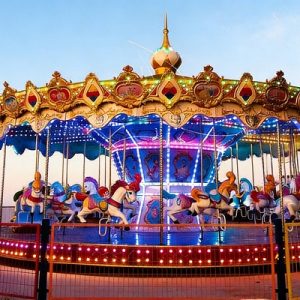
An outdoor carousel lives with the weather every day of its life. In hot climates the sun attacks paint and plastics; in rainy regions water finds every joint; on the coast salt air corrodes metal that was never properly protected. Choosing the right specification at the order stage prevents years of repair work. This guide explains how to select an outdoor carousel for coastal parks and other demanding environments.
Materials and Surface Protection
Start with the steel. Hot-dip galvanising followed by powder coating gives the best protection against humidity and salt, while stainless-steel fasteners prevent the small corrosion points that eventually loosen panels. Fiberglass and plastic figures should be UV-stabilised and finished with a clear protective coat so colours stay rich after years of sun. Ask the manufacturer to specify these treatments in writing, because the difference in cost is small compared with premature repainting.
Drainage and Platform Design
Water must never stand on the platform or inside the drive compartment. Good outdoor designs include drainage slots or channels in the platform, sealed bearings, and a raised base that keeps the mechanism clear of surface water. In regions with heavy rainfall, confirm how water leaves the canopy and how the electrical enclosure is ventilated without admitting rain. These details define whether a carousel is genuinely a weather resistant outdoor carousel or simply an indoor ride placed outside.
Wind Loads and Anchoring
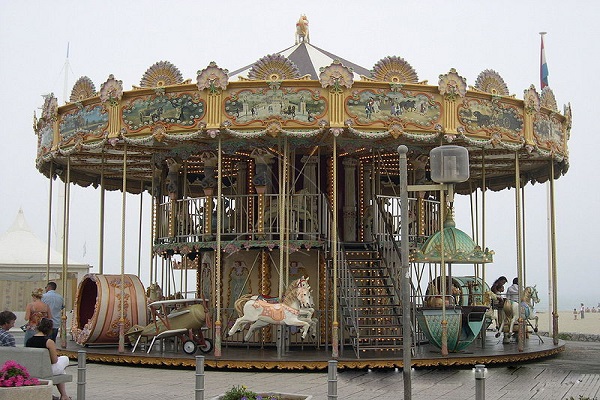
Canopy area makes wind the dominant structural load. Ask for the design wind speed and the foundation drawing, and have a local engineer confirm the anchor design for your soil. Exposed coastal sites and open plazas may need additional bracing or a lower canopy profile. Larger models such as a two-story carousel for outdoor parks present a greater wind surface and should always be specified with the site conditions in hand.
Sun Protection and Guest Comfort
In hot climates, shade over the queue and seating protects both guests and staff, and light-coloured surfacing reduces heat build-up around the ride. Consider the position of the sun during operation and plan lighting that remains effective at night. Safety mats, handrails, and steps should be designed so they stay safe when wet.
Electrical Protection and Lighting
Lighting accounts for most of the electrical components exposed to weather. Specify enclosures with a suitable ingress protection rating, sealed connectors, and surge protection where storms are common. LED systems reduce both energy consumption and heat, which extends component life. Confirm the voltage and whether the control cabinet can be installed in a nearby building.
Maintenance in Harsh Climates
Plan a maintenance routine that matches the environment: rinse salt residue in coastal parks, inspect drainage before the rainy season, and check coatings and fasteners each quarter. Keep spare lamps, seals, and small decorative parts in stock so the ride can be repaired immediately. A park that follows a climate-specific schedule keeps its carousel looking new far longer than one that simply reacts to failures.
Choosing an outdoor carousel comes down to specification: protected steel, UV-stable finishes, effective drainage, and wind-resistant foundations. Work with an experienced carousel equipment maker that documents these details, and review how traditional carousel rides outdoors have been adapted for different climates over the years. To compare specifications and request a quotation for your site, visit https://www.carouselmanufacturer.com/product/outdoor-carousel-rides-for-sale/.